

It’s all about the proposal: optimizing project economics

- November 15
- 4 Minute Read

I was reviewing the latest TSIA Techographic Optimizing Project Economics: Practical Advice You Can Use and frankly some of the data riled me up. Just last month, I joined forces with my project economics peers, including TSIA, in a webinar where some of this data was shared, but this Technographic brought it all together. So, let me rant a little first on the technographic data, and then I’ll get into the problem-solving.
Did you know that only 28% of sales teams are required to capture the customer’s desired business outcomes during the sales process, according to TSIA. Does that number seem low to you, too? How about that the average number of business days to deliver a proposal was 32 in 2022, with 60+ business days from quote to close. No wonder only 50% of sent proposals are actually accepted—also reported by TSIA.
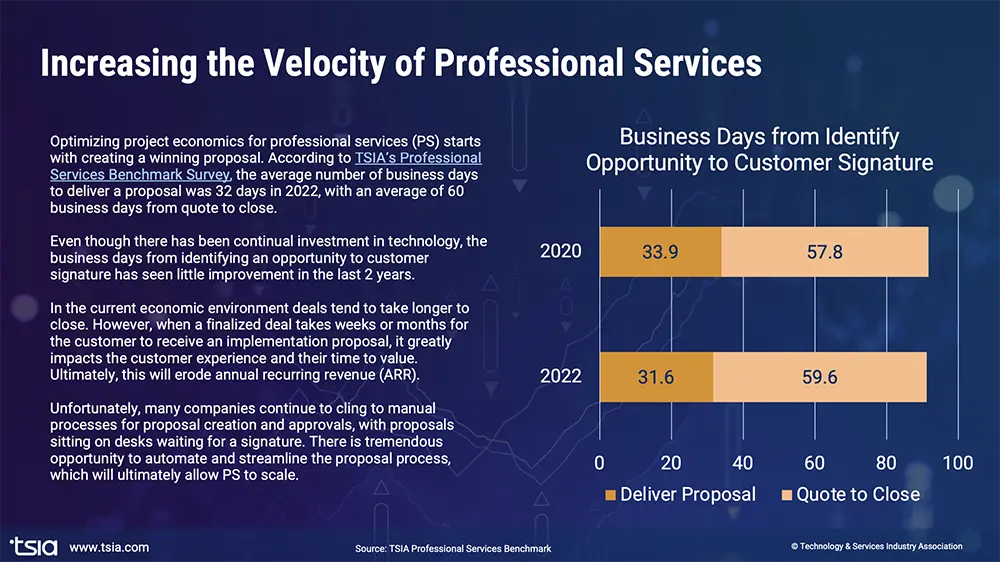
There’s lots of striking data in this technographic, showcasing what you need to improve, to not just win business but to make the project a winner. But for the purpose of this blog post, I am going to focus on the proposal as it is the first step to winning the long game. Let’s dive into a few of the most significant takeaways of the research on nailing the proposal.
Time is of the essence: streamlining the proposal timeline
As I mentioned before, quotes are taking too long. A whole lot can happen in a month, from interest rate shifts to your champion leaving to global instability. In an era where speed is synonymous with success, the inability to expedite this process can have serious implications on customer satisfaction and the bottom line. Organizations must reevaluate and modernize their proposal workflows to expedite the journey from opportunity to signature, thus safeguarding Annual Recurring Revenue (ARR) and improving win rates.
Tech investment vs. proposal efficiency
Despite consistent investments in technology, the efficiency of the proposal creation process has seen minimal improvement over the past two years. It is almost as if no one is using any of this great collaboration technology and automation we all implemented during COVID! This misalignment raises multiple questions for me about the integration and utilization of technology in the proposal lifecycle. While the tech landscape evolves, organizations must ensure that their investments translate into tangible enhancements in proposal creation, collaboration, and overall project economics.
Automation for full scaling potential
A significant roadblock—carefully highlighted in the technographic—is the overwhelming reliance on manual processes for proposal creation and approvals. Proposals languishing on desks awaiting signatures not only introduce inefficiencies but also limit the scalability of professional services. Embracing automation and streamlining the proposal process presents a tremendous opportunity to break free from the shackles of manual workflows. It also allows resources to be allocated more efficiently. This not only accelerates the proposal timeline but empowers organizations to handle a higher volume of opportunities without compromising quality.
The discount factor
Another crucial factor to consider is the discount rate. The average discount of 18% between list rates and as-sold rates highlights the financial impact of discounting on project margins. Without a structured approach, this erosion can lead to long-term consequences. Automation, however, transforms the discounting game into a strategic numbers play, where every discount is a deliberate decision aligned with overarching business goals. By setting clear rules, monitoring thresholds, and automating the enforcement of discounting policies, you can navigate the delicate balance between competitiveness and profitability.
Let’s win some business
Crafting winning proposals is the cornerstone of optimizing project economics in professional services. But don’t wait too long. TSIA underscores the urgency for organizations to reevaluate and modernize their proposal workflows. By prioritizing speed, aligning technology with efficiency goals, and embracing automation, companies can not only survive but thrive in an environment where the proposal is the gateway to success.
Want to chat on the subject? Feel free to email me at [email protected]. I love a good project economics conversation.
Recent Articles




Maximize your Salesforce investment with Certinia