
Is Your Talent Strategy Ready for the Rise of the AI Orchestrator?

- September 10
- 5 Minute Read

This article is being published in conjunction with International Services Week (September 8-12, 2025), a global, industry-wide initiative led by Certinia to celebrate and advance the services community. Learn more and get involved at www.ServicesWeek.com.
For decades, the path to success in professional services was a straight line up: become the best at one thing, deepen your expertise, and climb the ladder.
As people leaders we face a critical inflection point. The introduction of AI-based digital labor is changing and the traditional career ladder we've built for the last century.
It’s time to rethink long-term workforce planning.
The old model of the "I-shaped" professional—deep in a single vertical—is being reshaped by the emergence of Agentic AI capable of augmenting human talent by automating a vast number of routine, repeatable tasks that frees human labor from administrative and low-level work.
This shift won’t make specialists obsolete, but it will elevate their role and demand a new set of skills focused on strategy and oversight. The traditional role of a deep specialist is evolving into a "T-shaped" professional who combines deep domain expertise with broad strategic capabilities.
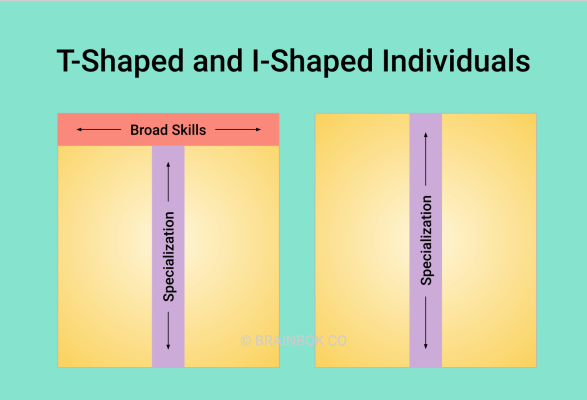
Source: Brainbok.com
This new breed of professional is the "Orchestrator"—someone who doesn't just do the work but can orchestrate a hybrid team of people and AI agents to deliver strategic value to clients. In fact, Salesforce recently highlighted the Orchestrator as one of the ten new jobs created by AI, describing the role as a conductor who designs how different AI agents might work together in harmony.
As business leaders, our most urgent task is to stop trying to fill roles on a broken ladder and start architecting a new talent ecosystem that cultivates Orchestrators.
The Anatomy of an Orchestrator
The modern services professional blends deep expertise with a broad set of strategic skills. As people leaders, we must build our talent strategies around a new competency model that defines the anatomy of an Orchestrator.
This model begins with strategic acumen, which is the ability to see the whole chess board, not just an individual piece. An Orchestrator understands the "why" behind the "what," connecting their technical work to the client's broader business objectives and speaking the language of the executive suite. This strategic view is powered by data fluency; the ability to interpret data from both human and AI-driven activities, ask the right questions, and use insights to tell a compelling story. Finally, as AI handles more of the technical load, human-centric leadership becomes the key differentiator. Uniquely human skills like empathy, influence, and complex stakeholder management are paramount. The Orchestrator excels at building trust and leading a hybrid team through influence, not just authority.
The New Leadership Mandate: A Blueprint for the People Function
Developing this new type of talent requires a fundamental shift in how we design our people programs. Organizations can't simply hire people who fit an Orchestrator profile. We must actively cultivate them.
This new leadership mandate is a blueprint for the modern People function, encompassing four key tenets:
- Build Coaches, Not Just Directors: Our leadership development programs must evolve. A leader's primary function is no longer just "directing work"—assigning tasks and monitoring progress. With AI handling routine execution, the leader's value shifts to being a "coach" who actively nurtures the strategic capabilities of their people. Our job as people leaders is to build the training and incentives that foster this coaching mindset.
- Make AI Literacy a Core Competency: Orchestrators don't need to be AI developers, but they must be fluent in managing a hybrid human-agent workforce. People leaders must partner with learning and development (L&D) teams to build programs that teach individuals how to effectively deploy, govern, and extract value from AI agents, ensuring they can confidently oversee this new "digital labor."
- Redesign Career Paths Beyond the Technical: We need to invest in new types of training beyond technical certifications, such as business finance, consultative selling, and data storytelling. More importantly, our career pathing and succession planning must reward the development of these strategic capabilities, not just vertical expertise.
- Engineer Cross-Functional Exposure: We must be the architects of talent mobility. It is our responsibility to champion and create the cross-functional project teams and rotational programs that give employees exposure to different parts of the business, helping them build the horizontal bar of their "T."
A Call to Action for Every CPO
The shift to workforces comprising both human and AI talent is happening sooner than most realize. This presents an immediate call to action for every one of us in the people function.
For our employees, we must empower them to take ownership of their career development. We need to provide not just the tools, but also the opportunities for them to seek out cross-functional projects and proactively build their strategic skills.
For our organizations, we must be the strategic partner to the whole C-suite and move beyond outdated talent models. The companies that will win the next decade are the ones whose people leaders recognize this shift and start building their workforce of Orchestrators today to chart a successful course through the disruption ahead.
Recent Articles




Maximize your Salesforce investment with Certinia